Search for more information

Ag anode (6-45kV, 1-200uA, 2W max) Dynamically adjustable current for optimal sensitivity on every analysis
Silicon drift detector (SDD) Detector ProGuard protection included
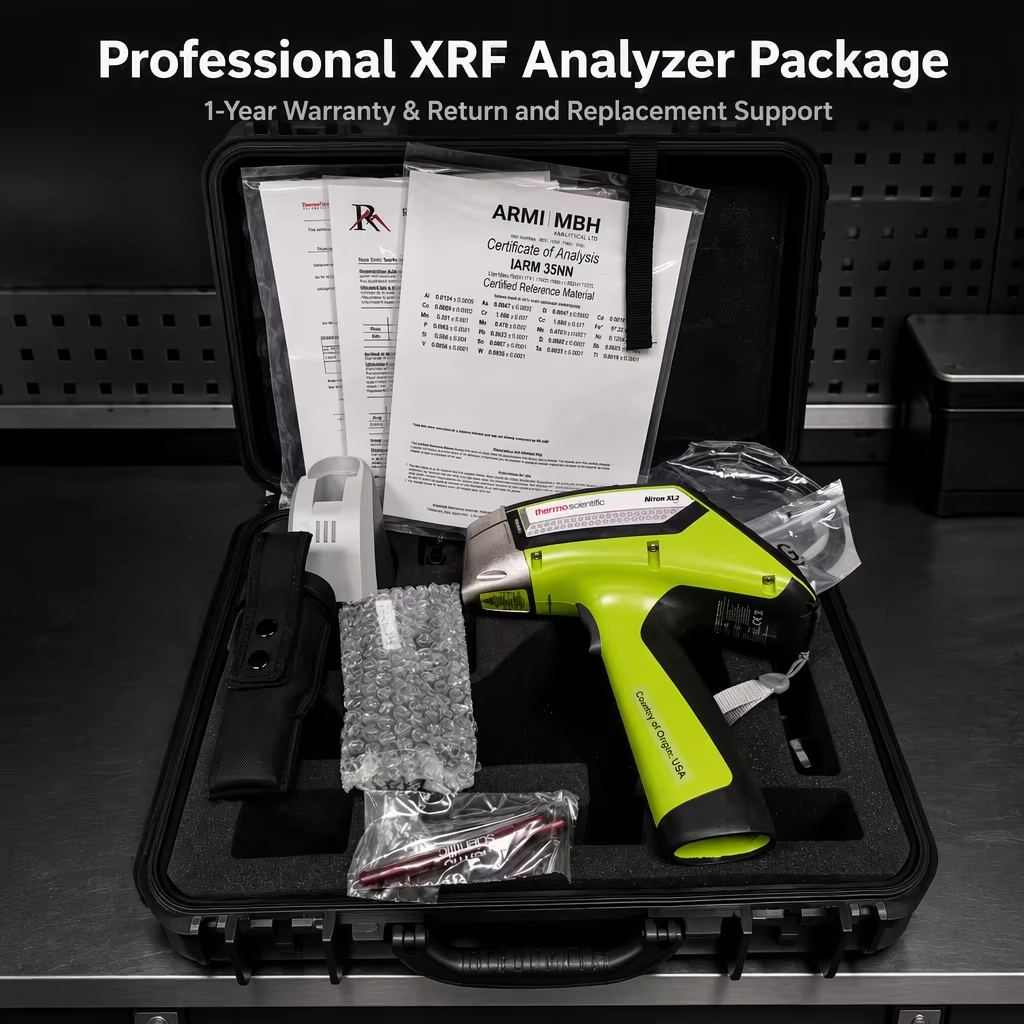
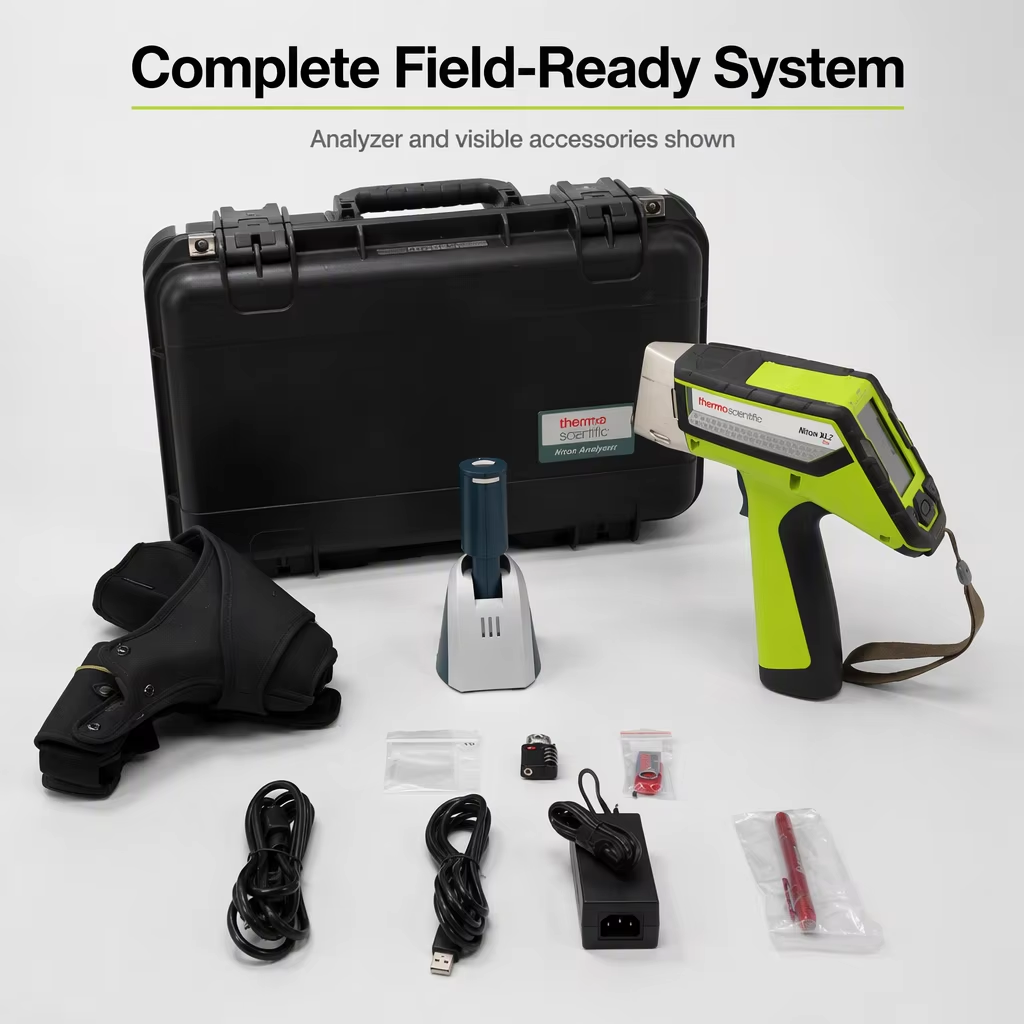
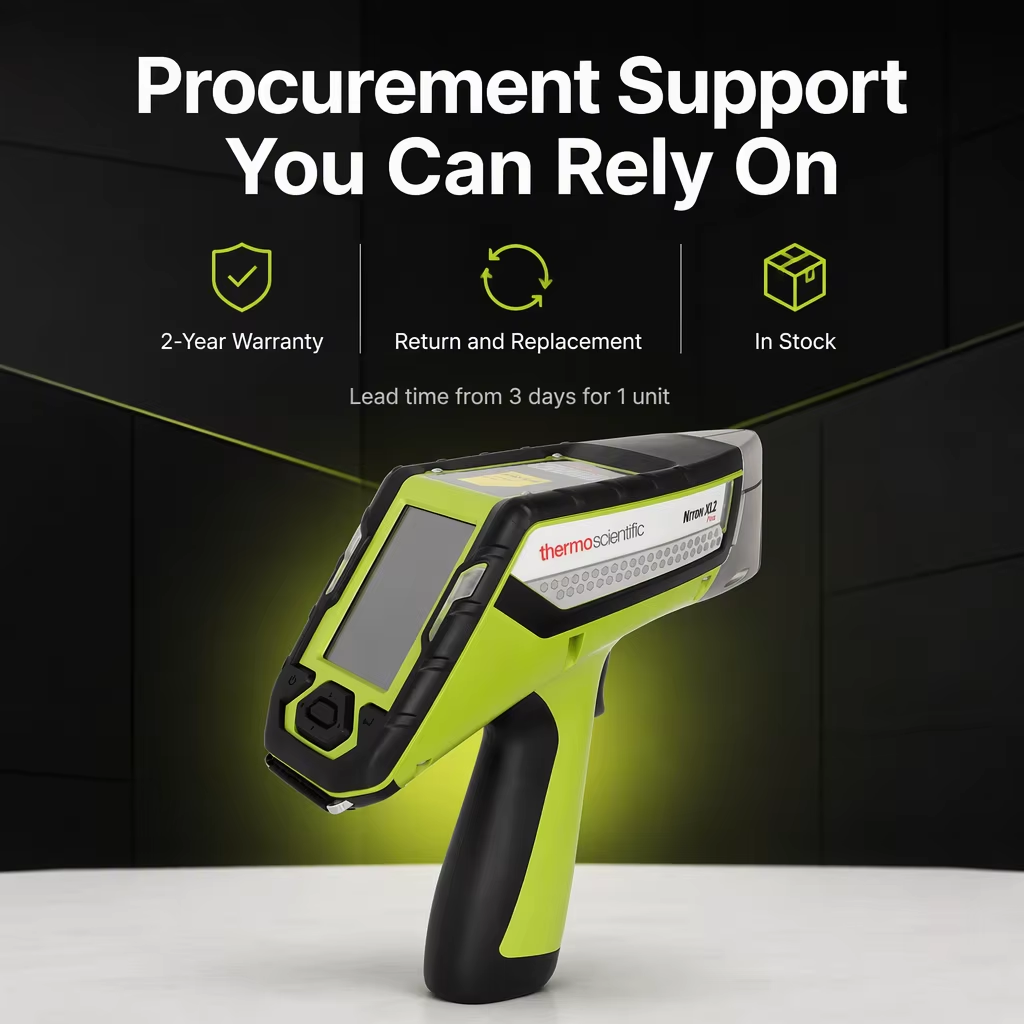
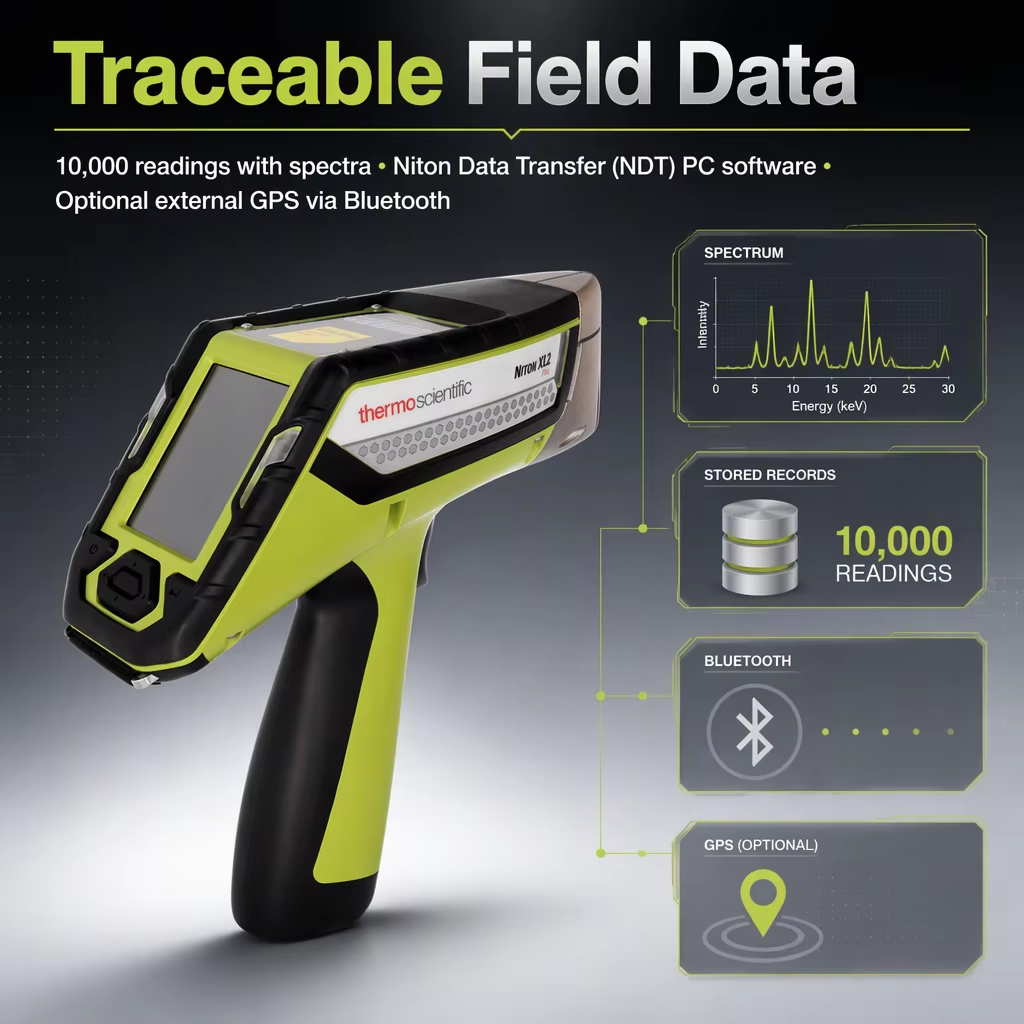
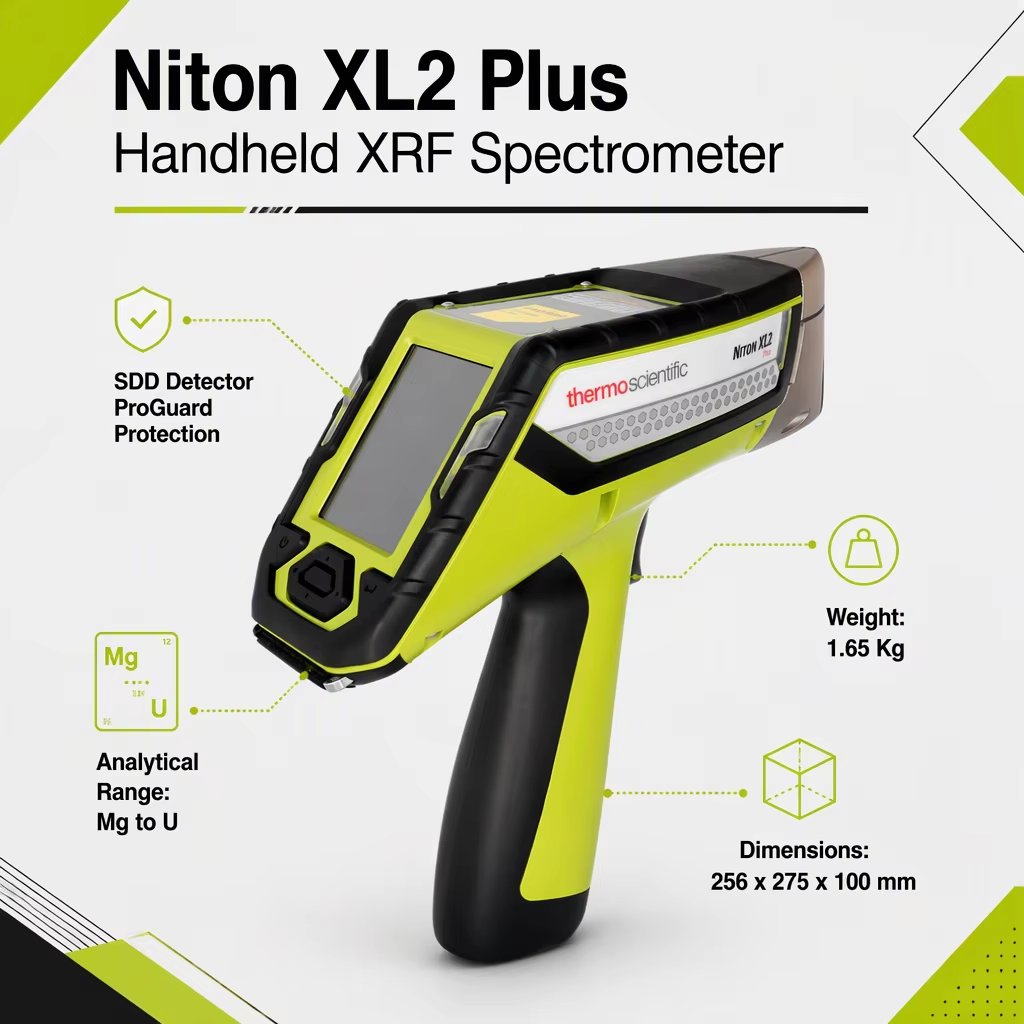
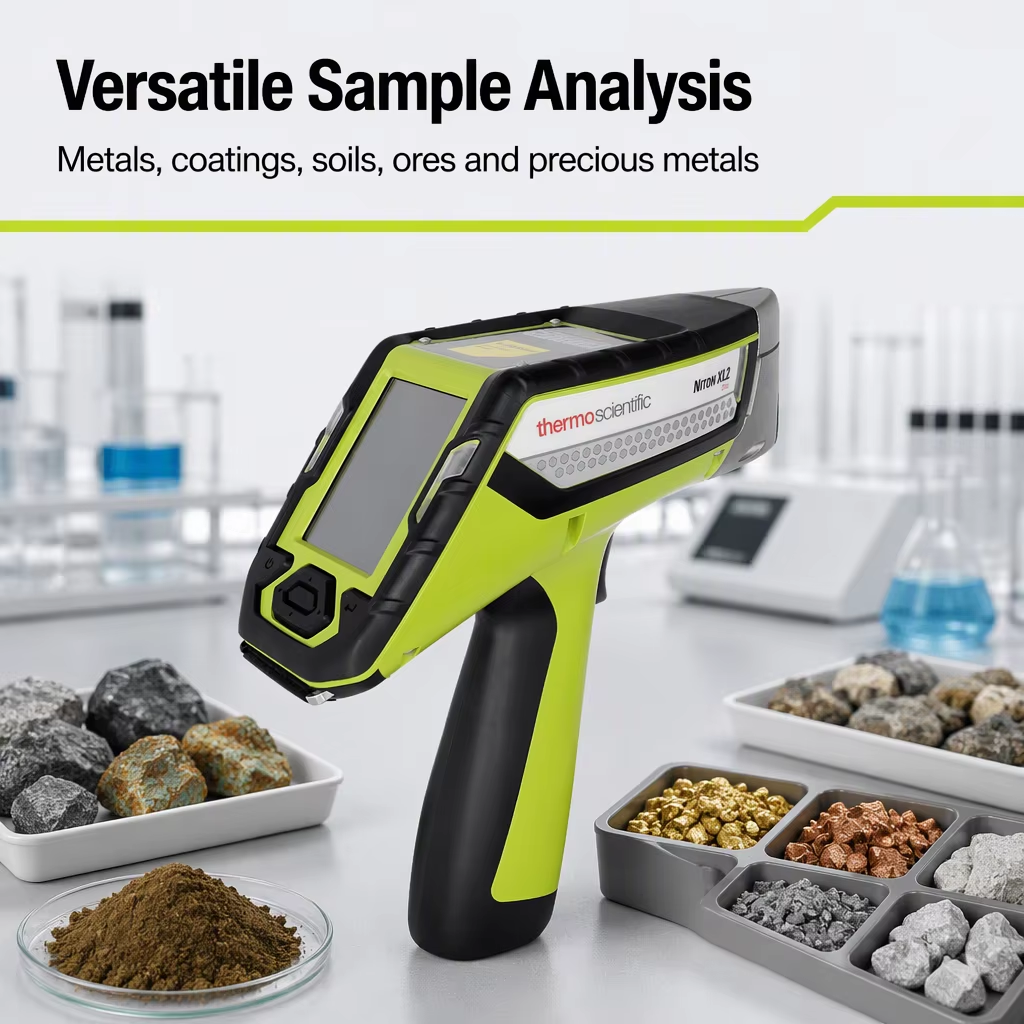
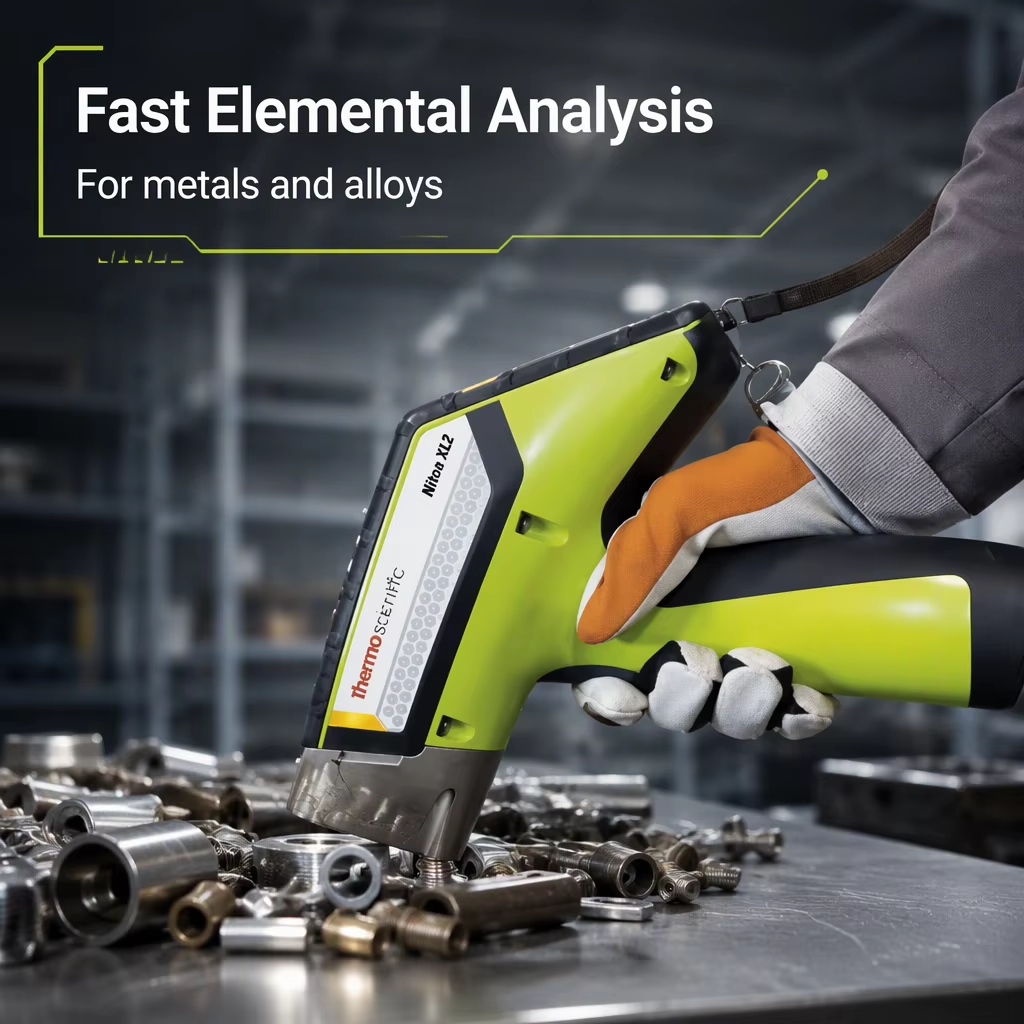
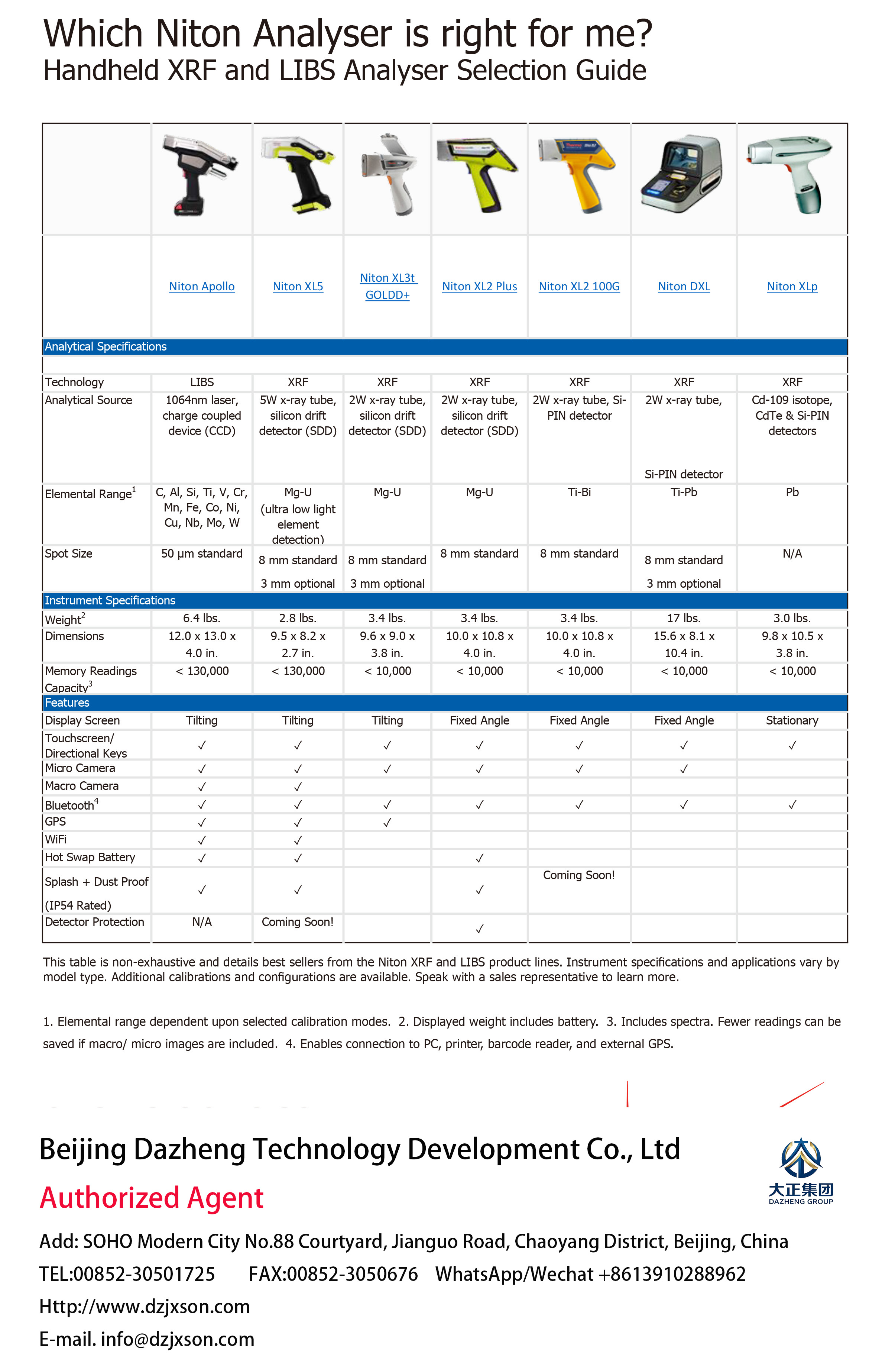
Thermo Scientific Niton XL2 980 PLUS XRF Analyzer
Confidently perform elemental analysis with the Thermo Scientific Niton XL2 Plus handheld XRF analyzer. When durability, performance and productivity are top of mind, industrial businesses rely on the Niton XL2 Plus handheld XRF analyzer for fast results and low detection limits. Identify pure metals and alloys, or obtain geochemical data, the Niton XL2 Plus provides operators the ability to scan a broad range of materials in one versatile analyzer.
The analytical capabilities of the Niton XL2 980 Plus can be summarized as follows: in standard alloy mode, it can analyze 31 elements, from magnesium (Mg) to bismuth (Bi); its nominal analytical range is broader, extending from magnesium (Mg) to uranium (U).
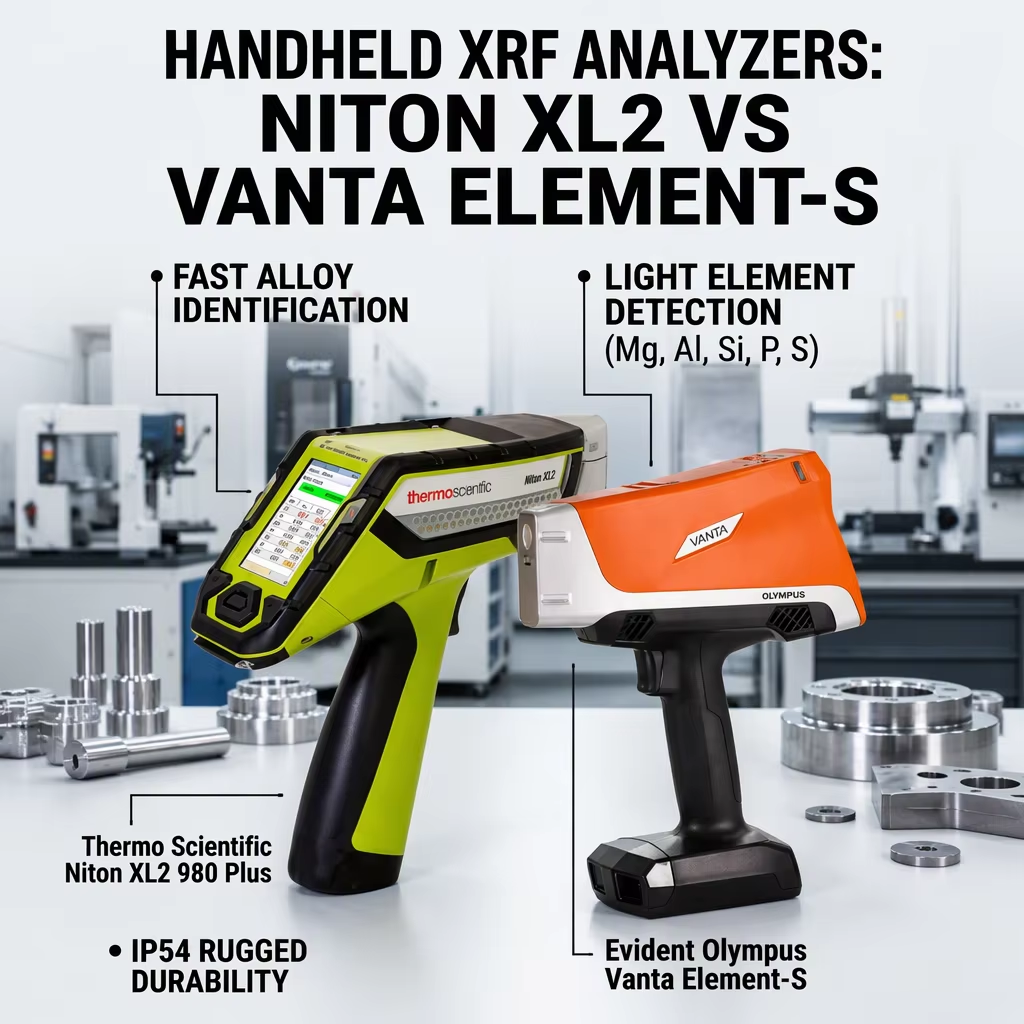
Features & Benefits
2W X-Ray Tube
Silicon Drift Detector (SDD) for light element detection (Mg, Al, Si, P, S)
Detector ProGuard Protection
Micro Camera
Hot Swap Battery
Touch Screen and Directional Keys
Password Protected Security
IP54 Certified (Splash/ Dust Proof)
Nose Cone Alignment Guides
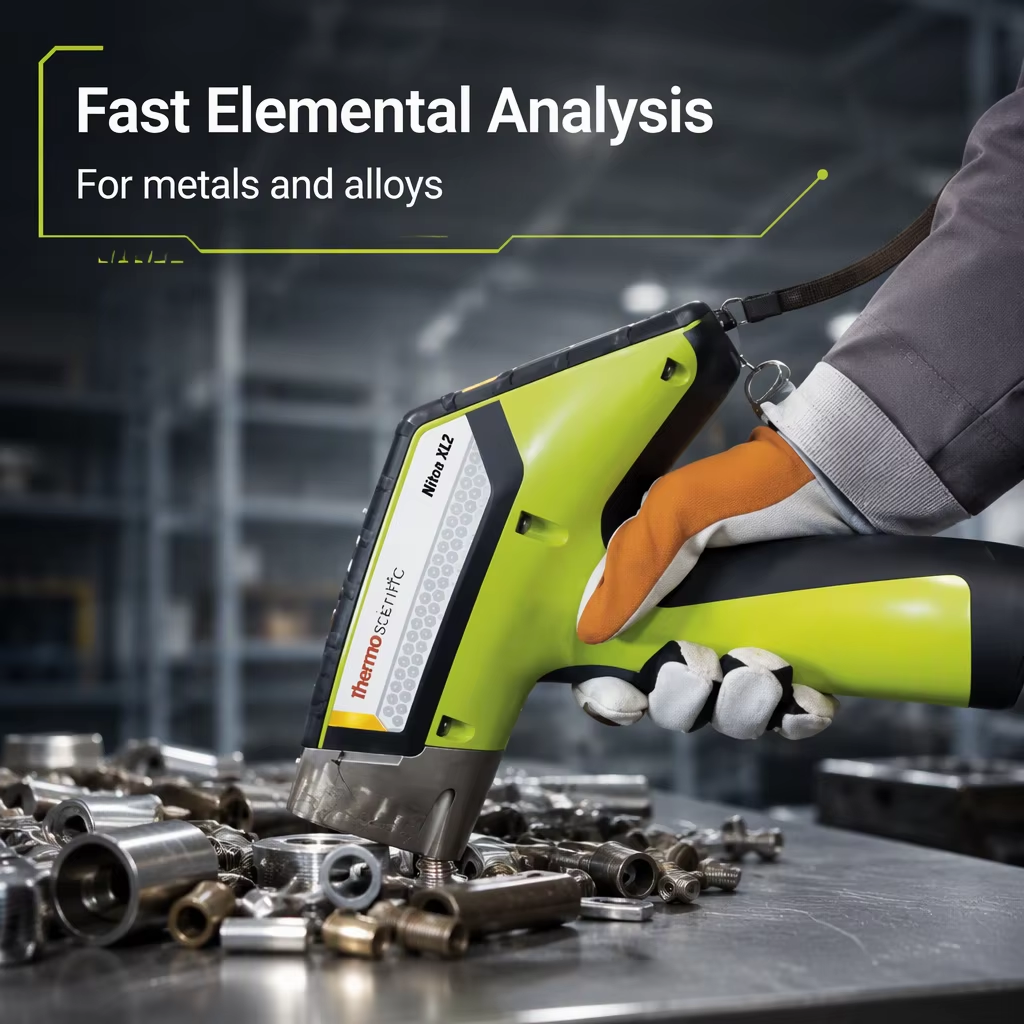
Applications
Verification of metals and alloys in manufacturing
Quality Assurance testing for positive material identification
Point-and-shoot sorting at scrap recycling operations
Coating thickness measurements from single element layers
Precious metal assay of bullion and jewelry
Geochemical analysis for ore trading and grade control
On-site heavy metal screening of polluted soils
Lead in paint inspection of industrial facilities
Screening of hazardous substances in consumer goods
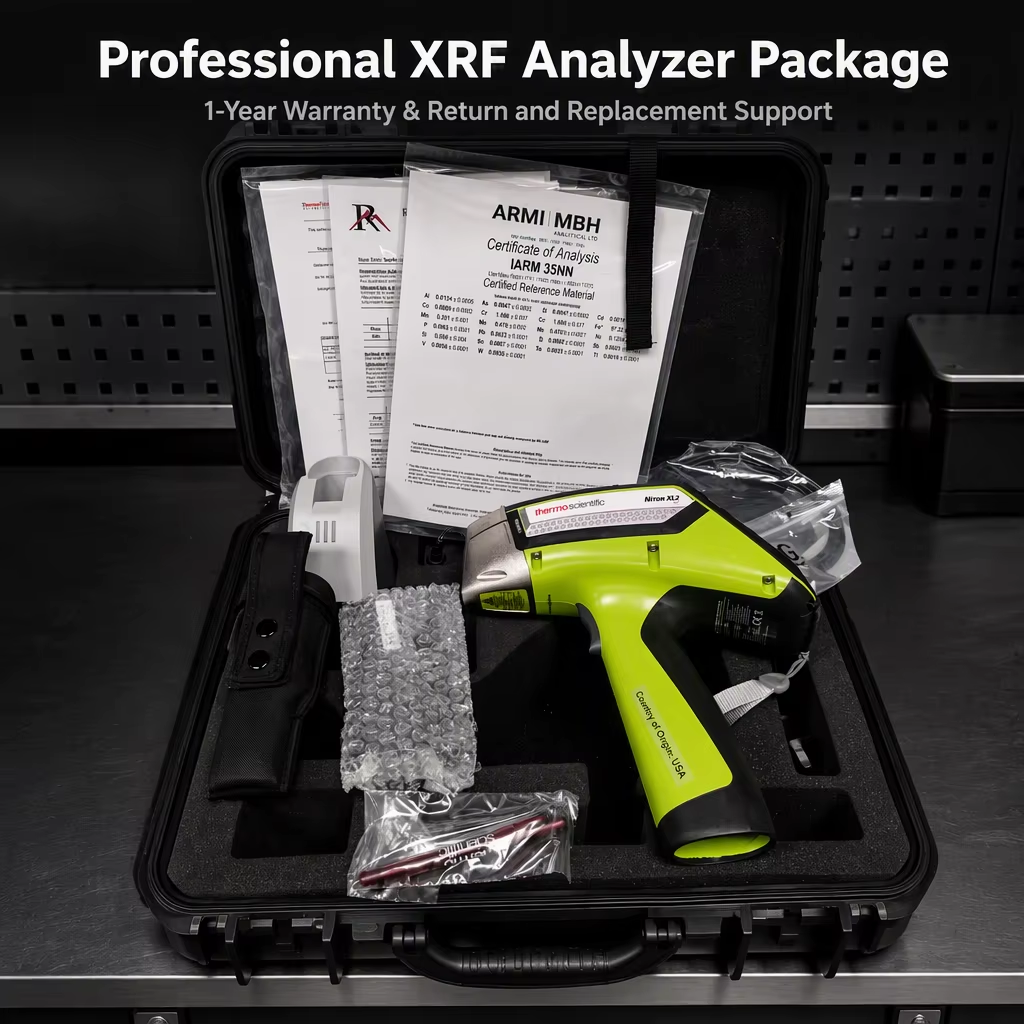
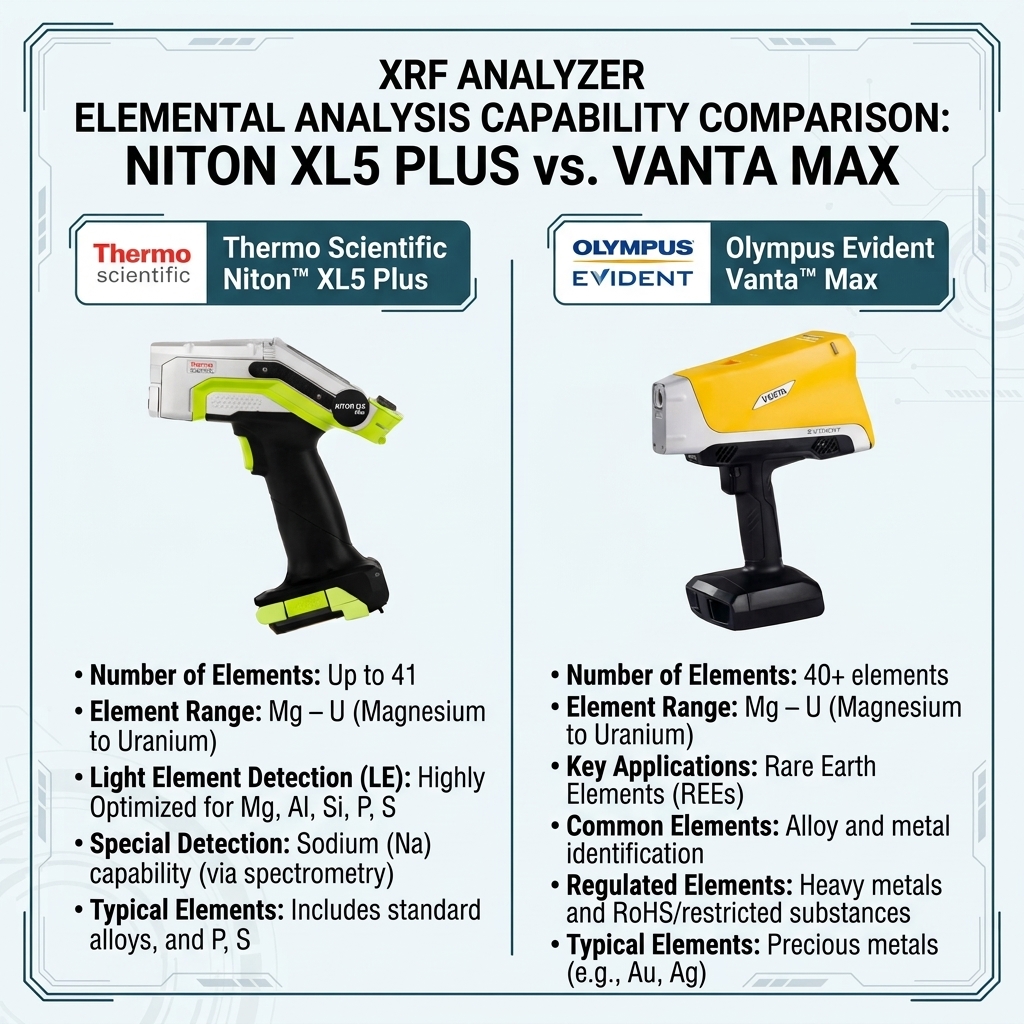
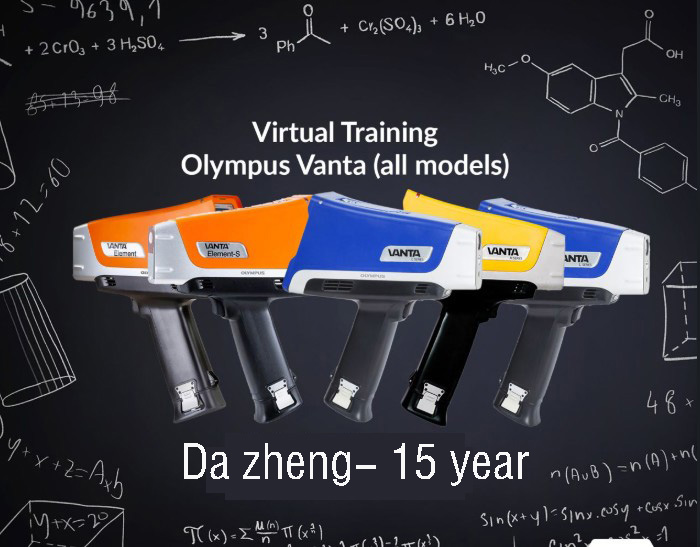
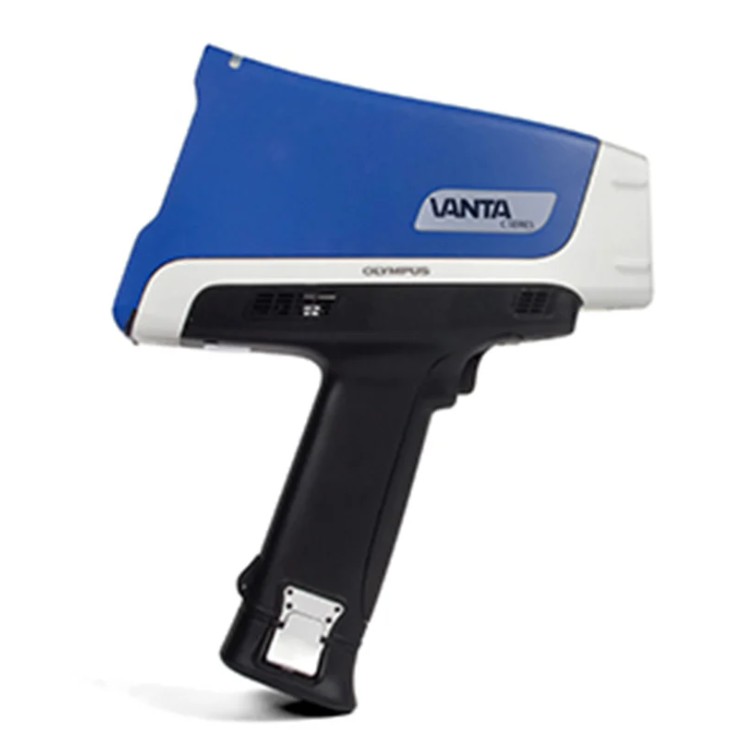
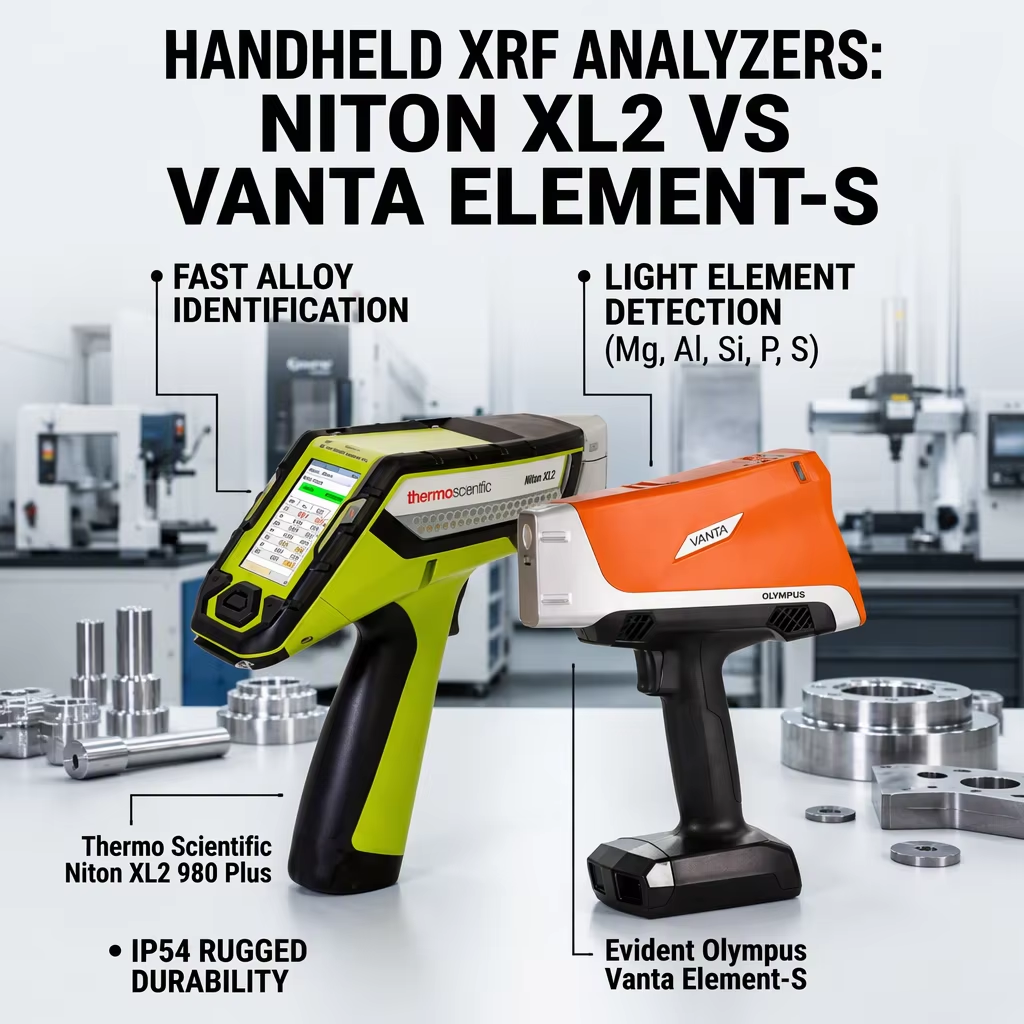
Thermo Scientific Niton XL2 980 Plus vs Olympus Vanta Element-S Handheld XRF Analyzers
Both instruments are used for alloy grade identification and elemental analysis, but their positioning differs: the XL2 980 Plus belongs to Thermo Scientific's GOLDD high-performance series, while the Vanta Element-S is Olympus's entry-level light-element detection model.
| Item | Niton XL2 980 Plus | Vanta Element-S |
| Manufacturer | Thermo Scientific | Olympus |
| Positioning | High-performance alloy analysis, GOLDD technology | Economical alloy ID and light-element detection |
| Detector | Silicon Drift Detector (SDD), GOLDD configuration | Silicon Drift Detector (SDD) |
| Excitation Source | Ag-anode X-ray tube, 6–45 kV, 1–200 μA, max. 2 W | 4 W X-ray tube, Ag anode, 50 kV |
| Element Range | Mg to U, 31 elements total; Nb detection limit as low as 200 ppm in Ti alloys and as low as 20 ppm in common alloys | Can analyze light elements such as Mg, Al, Si, S, and P |
| Light Element Analysis | Mg, Al, Si, P, S; no helium purge or vacuum required | Mg, Al, Si, S, P |
| Weight | 1.53 kg (with battery) | 1.32 kg (without battery); 1.54 kg (with battery) |
| Dimensions | 256 × 275 × 100 mm | 83 × 289 × 242 mm (W × H × D) |
| Drop Test | Not specified (industrial rugged design) | MIL-STD-810G, 1.2 m drop test |
| IP Rating | IP54 (dust and moisture resistant) | IP54 (dust and moisture resistant) |
| Operating Temperature | Up to 50°C | −10°C to 45°C |
| Display | Fixed-angle VGA color high-resolution touchscreen | 800×480 LCD capacitive touchscreen, gesture support |
| Data Storage | 128 MB user memory (approx. 10,000 readings) | 1 GB microSD card (included) |
| Connectivity | USB, Bluetooth, RS-232 | Dual USB 2.0 Type-A + Mini-B; optional Wireless LAN / Bluetooth |
| Battery | Hot-swappable lithium-ion battery, over 10 hours runtime | 14.4 V removable lithium-ion battery |
| User Interface | Touchscreen + optional directional keys; supports 11 languages, including Simplified Chinese | Smartphone-style UI, on-screen grade comparison |
| Typical Applications | Scrap sorting, alloy verification, mining exploration, RoHS screening | Scrap recycling, basic PMI, metal manufacturing, precious metal identification |
| Price Positioning | Mid-to-high end | Entry-level, high value for money |
Selection Notes
For lower detection limits and light-element precision: The XL2 980 Plus's GOLDD configuration further optimizes geometry and signal processing on top of the SDD, providing higher sensitivity for light elements such as Mg, Al, and Si. It also supports light-element analysis without helium purge, making it suitable for applications with higher analytical performance requirements.
For budget-sensitive users who value portability and ease of use: The Vanta Element-S is lighter at 1.32 kg without battery, carries MIL-STD-810G drop certification, and features a smartphone-style interface. While meeting basic alloy ID and light-element detection needs, it offers a lower entry threshold and better field portability.
Common features: Both have IP54 protection, both are equipped with SDD detectors, both can analyze common alloy elements from Mg to U, and both support light elements such as Mg, Al, Si, S, and P.